BUS News
Research Happy Hour Explores China’s Real Estate Policy and AI in Entrepreneurship
16 Oct, 2025
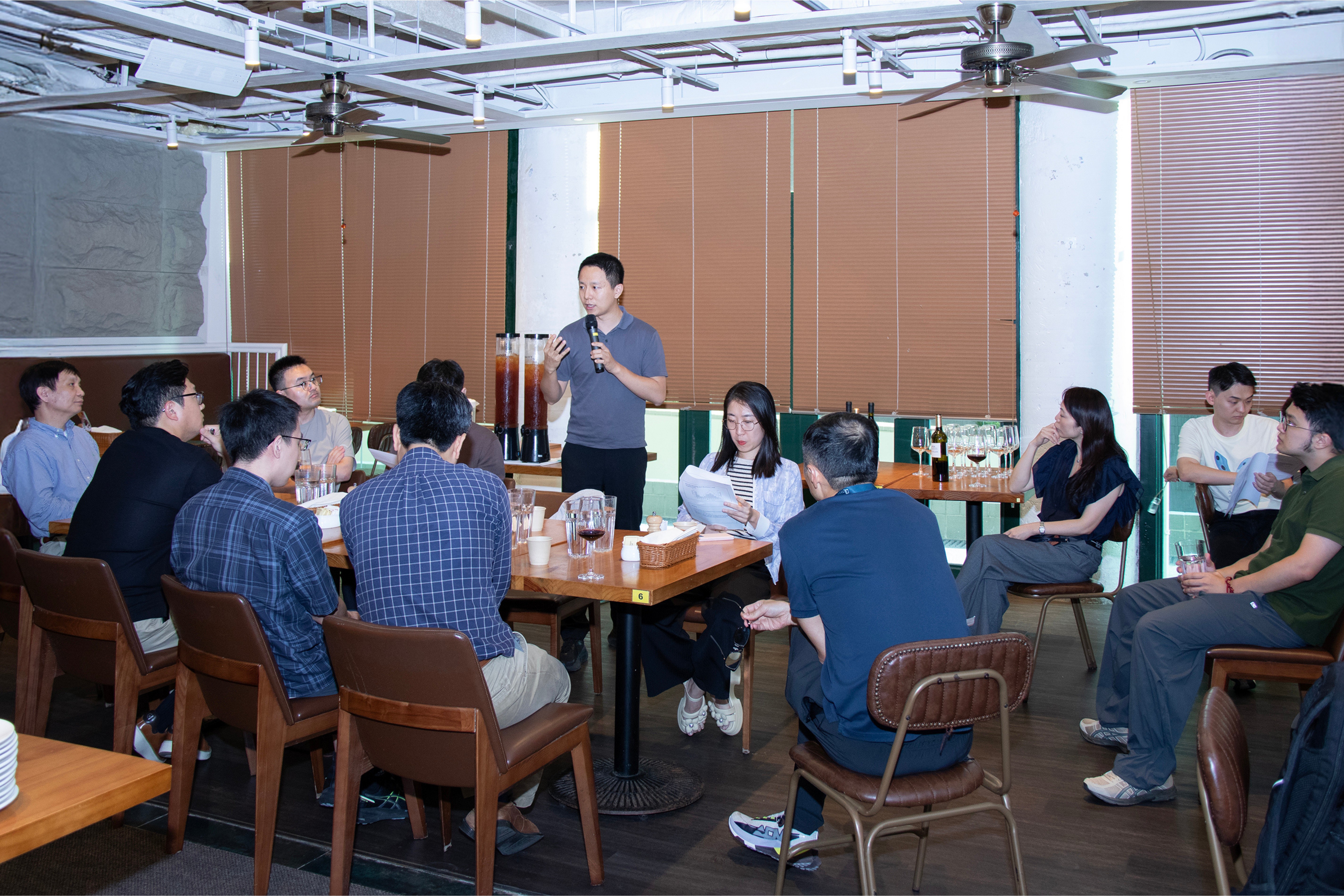
The HKBU School of Business hosted another networking session of the Research Happy Hour on 8 October 2025, bringing together faculty members and external scholars for an evening of interdisciplinary dialogue addressing socio-economic and technological challenges.
The evening began with a timely analysis of China’s “Three-Red-Lines” policy, presented by Prof. Kunru ZOU, Assistant Professor, Department of Accountancy, Economics, and Finance (AEF). He explained that the policy, established in 2021 to curb excessive borrowing by property developers, has triggered profound shifts in the real estate market.
Drawing on detailed project data, Prof. ZOU found that developers exceeding the “Three-Red-Lines” debt thresholds faced major financing restrictions, limiting their ability to acquire land and expand. His research revealed a growing divide in the sector: private developers are struggling, while state-owned firms are gaining ground. The study also highlighted a key consequence—local governments, hit by declining land sale revenues, are increasingly relying on “hidden” financing methods to sustain the market.
Shifting from economic policy to technological innovation, Prof. Jason LEE, Assistant Professor, Department of Management, Marketing and Information Systems (MMIS), presented a study on the impact of Artificial Intelligence (AI) on entrepreneurial performance.
Prof. LEE presented findings from an experimental entrepreneurship training programme designed to assess AI’s impact on startup success. The study aims to track both groups over time to determine whether AI integration can accelerate business launch and improve long-term viability. Participants were split into a control group and a treatment group, with the latter receiving targeted training on AI tools for strategic and operational tasks.
The event concluded with a networking session, fostering intellectual exchange and research collaboration.